|
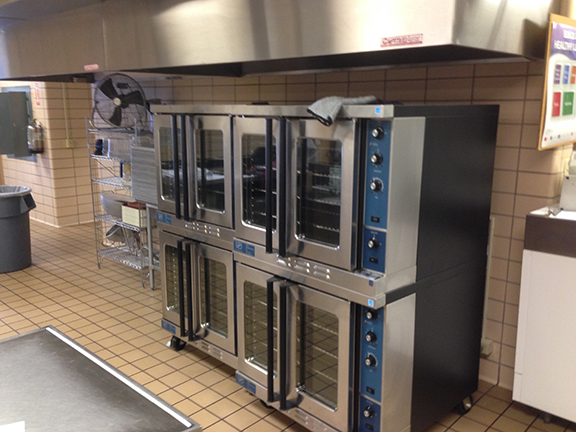
| Raymond S. Kellis High School Media Center, Peoria, AZ combines natural and interior lighting. |
We believe energy efficient schools designed around principals of abundant natural light, healthier materials, lower energy use, healthy, low-contaminant air, and connection with views and nature are better for students and teachers alike.
A June 4, 2015 online article in Mountain States Construction magazine shared news about an inter-disciplinary team that will research this issue. The team, led by Colorado State University, will conduct a three-year study to learn if green environments have measurable effect on student learning, behaviors, health and well-being, and test scores. [http://bit.ly/1GsHlDa] Their goal is to take what we anecdotally believe to be true and closely study the effects of green schools on student performance.
Research team members are being drawn from CSU’s Institute for the Built Environment, plus several disciplines including sociology, economics, and environmental health sciences. The St. Vrain Valley and Poudre School Districts in Northern Colorado will participate, helping researchers collect and measure data. The four-year, $1 million grant is funded by the US Environmental Protection Agency.
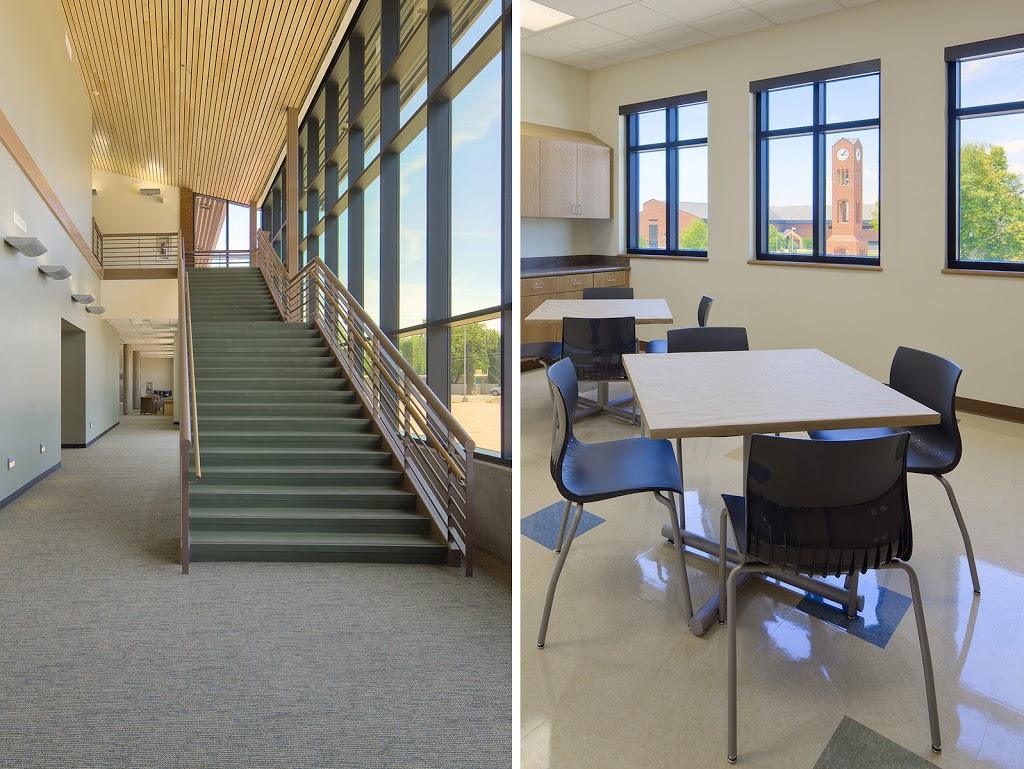 |
| Eastern Arizona College Skilled Nursing Facility, Thatcher, AZ |
A Prior Study
Student learning was improved with outside views of nature or human activity, in rooms with ample daylight with methods to control glare and heat, in rooms where teachers used whiteboards vs. chalkboards (particularly for math), in rooms with good quality air, and in rooms where noise levels were controlled both within and without. In its summary HMG found:
These findings suggest the importance school planners should give to the architectural design of schools. The statistical models repeatedly demonstrate that physical condition of classrooms and schools are just as likely to affect student learning as many other factors commonly given much more public policy attention. Variables describing the physical conditions of classrooms, most notably the window characteristics, were as significant and of equal or greater magnitude as teacher characteristics, number of computers, or attendance rates in predicting student performance.
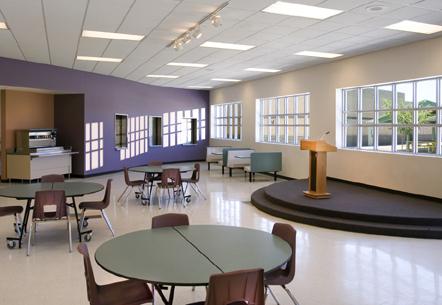 |
| Queen Creek High School Cafeteria and Student Center, Queen Creek, AZ |
Look for upcoming blogs on our healthy and energy efficient work in new and renovated schools.
Jim Murray, AIA, LEED GA is a principal with CSHQA and practices architecture in Denver, Colorado with an emphasis on designing healthy and energy efficient buildings. He works with Colorado school districts on upgrades to critical systems such as security, food service and roofing replacements, as well as long-term planning and design of new and renovated K-12 facilities.
In Arizona, Scott Beck, AIA and Michael Harris, AIA provide education design services to school districts, community colleges and universities throughout the state. Both of them bring over 30 years education design to new and renovated projects for classroom, food service, athletic, arts and performance, and vocational education spaces.